Hybrid cross-functional teams fail in predictable places: communication protocols that assume everyone is in the same room, goals that each department interprets differently, information that lives where remote members cannot reach it, and a trust deficit that grows when some people see each other daily and others do not. The practical response, supported by management guidance and workplace research, is a two-step process: first diagnose where your team's collaboration is actually breaking down, then apply a strategy matched to that specific weakness. This article provides a five-area diagnostic checklist and three evidence-based strategies to close the gaps it reveals.
The Hybrid Collaboration Challenge: Why Cross-Functional Teams Struggle
Cross-functional collaboration is inherently difficult because it asks people with different skills, vocabularies, and departmental priorities to work toward a shared goal. Writing from the University of Minnesota's College of Continuing and Professional Studies notes that with larger, more diverse departments and the potential for remote or hybrid teams, employees can easily fall into the trap of not looking beyond their own tasks or their department's immediate objectives. Leaders, in that framing, serve as the "bridge-builders" who drive collaboration across departments.
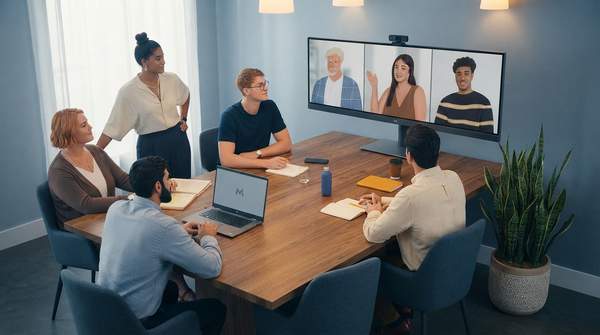
Hybrid working multiplies that difficulty. Mind Tools, in guidance on cross-team collaboration in the hybrid workplace by Simon Bell, points out that communication is harder for hybrid teams than for fully remote ones: when everyone works from home, at least they share the same working conditions, whereas hybrid teams split people between home and office. Remote workers are also more likely to have equipment and processes in place that support good communication, leaving the in-office and at-home halves of a team working under different conditions. Cross-functional teams add their own layer, since members may carry department-specific jargon and processes that exclude others.
The stakes are real. Employers need to ensure remote employees always have access to important information and can communicate easily with the rest of the team, as Haiilo's workplace guidance emphasizes, while also making sure those employees do not feel isolated or disconnected. Where those needs go unmet, information gaps and disconnection follow.