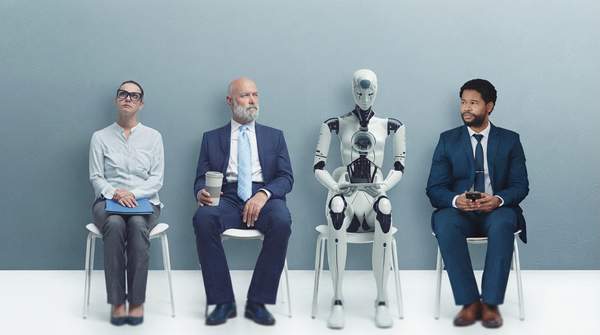
For most professionals, artificial intelligence is not eliminating your job — it is changing the tasks inside it, and that distinction should drive your career development. Early labor market data indicate AI is reshaping the skills required across jobs more than it is removing roles. The practical consequence: work that is routine, repetitive, and clearly prescribed is the most exposed, while judgment, problem framing, strategic thinking, creativity, and interpersonal ability are becoming more valuable, not less. This article explains why that shift is happening and gives you a framework to sort your own tasks into the two categories.
Understanding AI's Impact on Your Professional Skills
The dominant narrative — that AI destroys jobs — does not match what researchers are finding so far. A study co-authored by MIT Sloan associate professor Lawrence Schmidt, tracking AI adoption from 2010 to 2023, found that AI's impact is often on specific tasks within jobs rather than on whole occupations. When AI can perform most of the tasks that make up a job, the share of people in that role within a company falls by about 14%. But when AI affects only a few tasks in a role, employment in that role can actually grow.
That finding reframes the question professionals should ask. Instead of "Will AI take my job?", the more useful question is "Which of my tasks can AI absorb, and what does that free me to do?" Business Roundtable's analysis of emerging AI workforce trends, produced with the Burning Glass Institute, similarly concludes that AI is changing the work people do within their jobs and the skills required across jobs more than it is eliminating roles. Early data from that work show AI increasing demand for jobs that require judgment and creativity, while jobs with carefully prescribed tasks appear more vulnerable — though AI exposure alone does not determine whether a job grows or declines.
Employers are responding on the hiring side as well. The National Association of Colleges and Employers, reporting on employer surveys, finds that more than half of employers say AI is not reducing the tasks early-career workers perform, while just over a quarter say it has reduced the need for those tasks. Among employers seeking candidates who can use AI, the skills sought enable workers to use AI to complement, not replace, human work.